

What Is Anti-Reflective Glass And How It Was Made?
May 25, 2023
Leave a message
AR stands for Anti-Reflection coating, which reduces the amount of light reflected from the glass surface, reducing glare and flicker and improving visual clarity and contrast. With double-sides AR Coating, the maximum transmittance can increase to over 99% and its reflectivity to less than 1%. AR coatings are commonly used in electronic devices, high-definition displays, camera lenses, and solar industry etc.
AR coatings can reduce surface reflections on cover glass or camera lenses, making it easier for users to see images clearly. They can also reduce reflections and glare during the day or in bright indoor environments, enabling users to use eyeglasses or other optical instruments more comfortably.

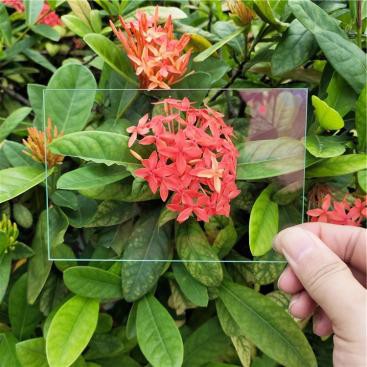
There are many production methods of AR coated glass, mainly including vacuum magnetron sputtering, vacuum evaporation.
The magnetron sputtering coated glass can be designed and manufactured by using the magnetron sputtering technology, and can be coated with multiple colors on the glass surface. The film has good corrosion resistance and wear resistance, and is one of the most common used method.
Compared with magnetron sputtering coated glass, the variety and quality of vacuum evaporation coated glass has a certain gap, and has been gradually replaced by vacuum sputtering. Chemical vapor deposition (CVD) method is to inject reaction gas into the float glass production line to decompose on the hot glass surface and deposit evenly on the glass surface to form coated glass. This method is characterized by less equipment investment, easy regulation, low product cost, good chemical stability, and hot processing. It is one of the most promising production methods.


If you’re looking for a AR/AG/AF/ITO Coating solution for your products, KS Glass team will provide you the most suitable solution with more than 10 years each experience. Please feel free to contact us!