



Custom Swiping Card Reaction Control Display Cover Glass Panel
Description
Technical Parameters
Swiping Card Reaction Control Glass
What is Reaction Control Glass?
Reaction Control Glass is a high-performance specialized glass designed as a functional carrier for precision reaction control systems, integrating structural protection, signal transmission, and environmental adaptability. It serves as a critical component in devices requiring rapid, accurate response to external stimuli (e.g., touch, pressure, temperature) or internal control signals, bridging the gap between human-machine interaction (HMI) and core control modules.
Typically manufactured from chemically strengthened aluminosilicate glass or tempered glass (thickness: 1.0mm–5.0mm), it undergoes precision processing (e.g., ion exchange, micro-etching) and optional functional coatings (conductive layers, AR/AF treatments). Key properties include surface hardness ≥6H, high impact resistance, excellent flatness (deviation ≤0.15mm/m), and stable performance across extreme temperatures (-40℃ to 120℃). It supports rapid signal response (≤5ms) and compatibility with sensing technologies (capacitive touch, pressure sensors).
Widely applied in industrial automation control panels, automotive electronic control systems (e.g., autonomous driving sensors), medical equipment reaction modules, and smart device precision controls, it balances durability, functionality, and reliability.
Advantage of Reaction Control Glass
Ultra-Precise Signal Transmission: Optimized for control system interactions, it features low signal loss (transmission efficiency ≥98%) and rapid response time (≤5ms), ensuring accurate capture and transmission of touch, pressure, or temperature signals. The glass's exceptional flatness (deviation ≤0.15mm/m) and stable dielectric properties minimize signal interference, critical for high-precision devices like autonomous driving sensors and industrial PLC control panels.
Robust Mechanical & Environmental Durability: Chemically strengthened or tempered, it achieves surface hardness ≥6H and high impact resistance (withstanding 2m steel ball drop tests), resisting scratches, collisions, and wear in harsh industrial or automotive environments. It maintains stability across -40℃ to 120℃ and resists moisture (RH 0–95%) and chemical corrosion (oils, cleaning agents), ensuring long-term reliability in extreme working conditions.
Strong Compatibility & Customization Flexibility: It seamlessly adapts to diverse control technologies (capacitive touch, pressure sensors, infrared sensing) and supports tailored specifications: thickness (1.0mm–5.0mm), size (from small instrument panels to large industrial control screens), and edge/hole processing (precision drilling, beveling). Compatible with conductive coatings (ITO) and connector interfaces, it integrates smoothly with core control modules, reducing buyer's assembly costs.
Integrated Functional Enhancement: Optional value-added treatments (AR/AF coatings, anti-corrosion layers) expand its usability. AR coating boosts light transmittance (≥92%) for clear display visibility; AF coating repels fingerprints and oil stains for easy cleaning (ideal for medical equipment); anti-corrosion layers enhance resistance to industrial chemicals, extending service life in manufacturing settings.
Global Compliance & Safety Assurance: Compliant with RoHS, REACH, and ISO 9001 standards, it contains no harmful substances, ensuring market access in Europe, North America, and Southeast Asia. For medical applications, it meets ISO 13485 certification requirements, with a non-porous surface inhibiting bacterial growth-suitable for diagnostic equipment and surgical control panels.
Seamless System Integration: Designed to match the installation needs of control modules, it supports bonding, clamping, or embedded mounting, enabling tight integration with circuit boards and sensors. Its lightweight (density ≤2.5g/cm³) and thin-profile design also helps reduce the overall weight of control devices, aligning with the trend of miniaturized intelligent equipment.

Quality difference
Quality difference between good quality (ours) & bad quality
|
Item |
Our quality |
Bad quality |
|
Toughened |
6H+ |
Easy broken |
|
Edge breakage |
No such problem |
There may teeth exist |
|
Silk print |
Neat and orderly |
Incline, holes, inhomogeneous, lose colour |
|
Surface |
Smooth |
Scratch, white spot and blue shade |
|
Drilling hole |
100% satisfy with tolerance request |
Exceed tolerance may couse problem in assembly |
|
Edge work |
No sharp and can meet all bevel shapes request |
Coarse |
Tempered glass panel flow chart

Application
Medical device
Home appliances
Furniture
Electronic product
Sports facilities
Ad display
Elevator
Edge treatment

FAQ
Q1: Should glass be tempered and what's the difference between Chemical tempered and Physical tempered?
A: To small size/thickness less than 3.2mm,we recommend chemical tempered.(surface toughen by 6-7H)To bigger size/thickness above 3.2mm, we recommend physical tempered.Base on thermal tempered, the fragmentation test standard / partical sizes & quantity could be set base ondifferent thickness.The glass flatness could be asked after tempering.
Q2: What kind of glass will be used?
A: Lighting We usually use clear / ultra clear float glass for production, depends on customer's need.Cover glass We usually use AGC(Dragontail) for production, but also available in gorilla/NEG etc. base oncustomer's needFurniture glass We usually use high quality flat/bending glass.
Q3: Do you accept small order?
A: Any order quantity is welcome. But some type of products are high cost that not suitable for small order
Q4: Can l get samples and check your Quality?
A: Yes. Contect our sales with detailed Requirements /Drawings, or just an idea or a sketch. We will deliver thesample to you.
Q5: What should l provide to get a quotation?
A: 1.The kind of glass, thickness and size.
2. Drawing of the glass.
3.Requirements in details.
4.Order quantity.
5. Others you think is necessary.
6.Process balance payment and advise us your opinion on safe delivery.
7. Enjoy your order.
Q6: Where is your company? Which port near you? Can l pay a visit?
A: Welcome. Our factories are located in Guangdong China, near to Shenzhen and Guangzhou port. Please letus know if you want to come, we will advise route guidance in details.
Hot Tags: custom swiping card reaction control display cover glass panel, China custom swiping card reaction control display cover glass panel manufacturers, suppliers
Delivery & Payment

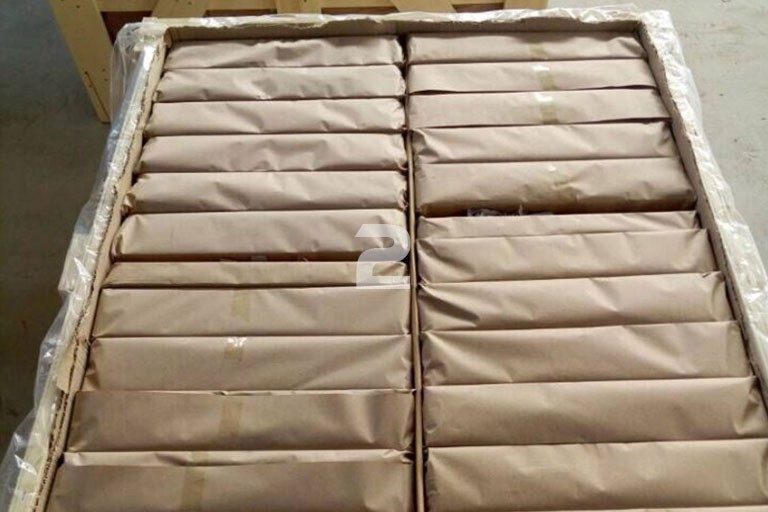


Packaging:
Step 1: PE film coating(Normally) / paper(For seashipment prevent wet).
Step 2: Kraft paper for fixation.
Step 3: Carton for glass safety protection.
Step 4: Custom make plywood case with hinge for custom(fumigation + convenient inspection) convenience.
Step 5: Packing strap for further fixation.
Port
Shenzhen or Hongkong

Send Inquiry
You Might Also Like