



Ultra-thin Tempered Glass Screen Protector For Tablet PC

Ultra-thin Tempered Glass Screen Protector For Tablet PC suppliers

Ultra-thin Tempered Glass Screen Protector For Tablet PC factory

Ultra-thin Tempered Glass Screen Protector For Tablet PC best

Ultra-thin Tempered Glass Screen Protector For Tablet PC high quality

Ultra-thin Tempered Glass Screen Protector For Tablet PC price
Ultra-thin Tempered Glass Screen Protector For Tablet PC
Description
Technical Parameters
Tempered Glass Screen
What is Tempered Glass Screen
?
A tempered glass screen refers to a safety-enhanced display protective component manufactured via a specialized thermal or chemical tempering process. It is widely used as a front cover for electronic devices, serving as a critical barrier between the internal display panel and external environments.
The production involves heating ordinary glass to around 600–700°C and then rapidly cooling it, which creates compressive stress on the surface and tensile stress inside. This process enhances its mechanical properties dramatically: its impact resistance is 3–5 times that of regular glass, and its Mohs hardness reaches 6–7, effectively resisting scratches from daily objects like keys or coins.
A key safety feature is its shattering behavior-when broken, it fragments into small, blunt particles instead of sharp shards, minimizing injury risks. With high light transmittance (≥91%), it preserves display clarity while offering protection against drops, spills, and wear. It is extensively applied in smartphones, tablets, laptops, and industrial control displays.
Advantage of Tempered Glass Screen
Exceptional Impact and Scratch Resistance is its core strength. Through rapid heating (600–700°C) and quenching, tempered glass forms compressive stress on the surface (up to 1000–1500 MPa) and tensile stress internally, enhancing its impact resistance by 3–5 times that of regular glass. It can withstand drops from 1.5 meters onto concrete without shattering, effectively protecting internal display panels from accidental damage. With a Mohs hardness of 6–7, it resists scratches from daily objects like keys, coins, and nails-critical for devices used frequently, such as smartphones, tablets, and industrial control screens.
Enhanced Safety Performance minimizes injury risks. Unlike ordinary glass that breaks into sharp, jagged shards, tempered glass fragments into small, round-edged particles when shattered. This "dicing effect" eliminates the risk of lacerations, making it compliant with global safety standards (e.g., ISO 12543, ASTM C1048). For applications like automotive infotainment systems, medical monitors, and public display screens, this safety feature is non-negotiable, protecting users and reducing liability for manufacturers.
Superior Optical Clarity Preserves Display Quality . Tempered glass boasts a light transmittance of ≥91%, nearly identical to raw display panels, ensuring vivid colors, sharp details, and true-to-life visuals. Advanced surface treatments-such as anti-glare (AG) coating to reduce reflections and anti-fingerprint (AF) coating to repel smudges-further enhance readability. Even in bright sunlight or high-humidity environments, users can view content clearly without glare or smudge interference, a key advantage for outdoor devices (e.g., GPS navigators) and touchscreen products.
Durable and Long-Lasting Performance reduces replacement costs. Tempered glass resists wear, corrosion, and yellowing over time, maintaining its performance for 3–5 years under normal use-far longer than acrylic (1–2 years) or plastic covers. It is also resistant to temperature fluctuations (-30°C to 80°C) and chemical exposure (e.g., cleaning agents, sweat), making it suitable for harsh environments like industrial workshops, medical facilities, and outdoor kiosks. Its durability lowers maintenance and replacement frequency, delivering long-term cost savings for both end-users and manufacturers.
Seamless Touch Sensitivity and User Experience . With a ultra-thin design (0.3–1.0 mm) and smooth surface, tempered glass preserves the original touch response of devices, supporting precise gestures (e.g., swiping, tapping, zooming) without latency. Unlike plastic covers that may become sticky or unresponsive over time, tempered glass maintains consistent touch performance, enhancing user satisfaction for smartphones, tablets, and interactive displays.
Versatile Customization for Diverse Applications . Manufacturers offer tailored solutions, including custom sizes (from 2-inch smartwatch screens to 55-inch industrial displays), shapes (curved, rectangular, irregular), and additional processing (edge chamfering, hole drilling, silk-screen printing). This flexibility allows tempered glass to integrate seamlessly with various devices, from consumer electronics to automotive dashboards and medical monitors, meeting the unique needs of different industries.

Quality difference
Quality difference between good quality (ours) & bad quality
|
Item |
Our quality |
Bad quality |
|
Toughened |
6H+ |
Easy broken |
|
Edge breakage |
No such problem |
There may teeth exist |
|
Silk print |
Neat and orderly |
Incline, holes, inhomogeneous, lose colour |
|
Surface |
Smooth |
Scratch, white spot and blue shade |
|
Drilling hole |
100% satisfy with tolerance request |
Exceed tolerance may couse problem in assembly |
|
Edge work |
No sharp and can meet all bevel shapes request |
Coarse |
Tempered glass panel flow chart

Application
Medical device
Home appliances
Furniture
Electronic product
Sports facilities
Ad display
Elevator
Edge treatment

FAQ
Q1: Should glass be tempered and what's the difference between Chemical tempered and Physical tempered?
A: To small size/thickness less than 3.2mm,we recommend chemical tempered.(surface toughen by 6-7H)To bigger size/thickness above 3.2mm, we recommend physical tempered.Base on thermal tempered, the fragmentation test standard / partical sizes & quantity could be set base ondifferent thickness.The glass flatness could be asked after tempering.
Q2: What kind of glass will be used?
A: Lighting We usually use clear / ultra clear float glass for production, depends on customer's need.Cover glass We usually use AGC(Dragontail) for production, but also available in gorilla/NEG etc. base oncustomer's needFurniture glass We usually use high quality flat/bending glass.
Q3: Do you accept small order?
A: Any order quantity is welcome. But some type of products are high cost that not suitable for small order
Q4: Can l get samples and check your Quality?
A: Yes. Contect our sales with detailed Requirements /Drawings, or just an idea or a sketch. We will deliver thesample to you.
Q5: What should l provide to get a quotation?
A: 1.The kind of glass, thickness and size.
2. Drawing of the glass.
3.Requirements in details.
4.Order quantity.
5. Others you think is necessary.
6.Process balance payment and advise us your opinion on safe delivery.
7. Enjoy your order.
Q6: Where is your company? Which port near you? Can l pay a visit?
A: Welcome. Our factories are located in Guangdong China, near to Shenzhen and Guangzhou port. Please letus know if you want to come, we will advise route guidance in details.
Hot Tags: ultra-thin tempered glass screen protector for tablet pc, China ultra-thin tempered glass screen protector for tablet pc manufacturers, suppliers
Delivery & Payment

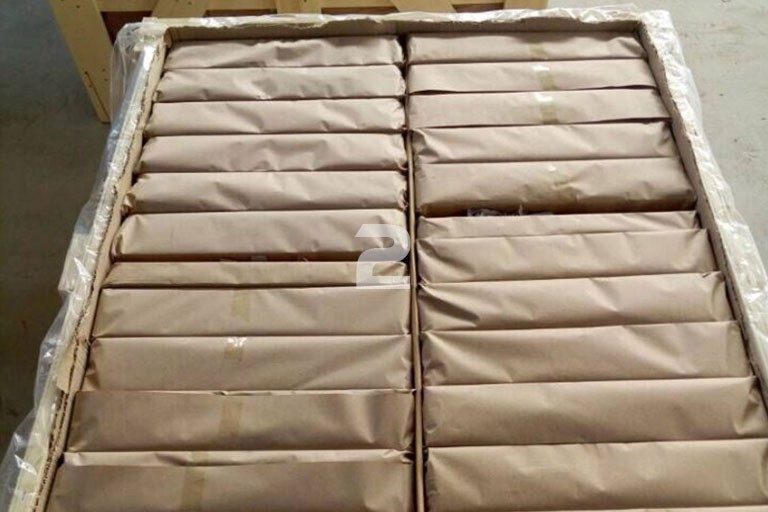


Packaging:
Step 1: PE film coating(Normally) / paper(For seashipment prevent wet).
Step 2: Kraft paper for fixation.
Step 3: Carton for glass safety protection.
Step 4: Custom make plywood case with hinge for custom(fumigation + convenient inspection) convenience.
Step 5: Packing strap for further fixation.
Port
Shenzhen or Hongkong

Send Inquiry
You Might Also Like