



Transparent Curved Glass Tempered Heat-bent Panel

Transparent Curved Glass Tempered Heat-bent Panel suppliers

Transparent Curved Glass Tempered Heat-bent Panel factory

Transparent Curved Glass Tempered Heat-bent Panel best

Transparent Curved Glass Tempered Heat-bent Panel high quality

Transparent Curved Glass Tempered Heat-bent Panel price

Transparent Curved Glass Tempered Heat-bent Panel high quality
Transparent Curved Glass Tempered Heat-bent Panel
Description
Technical Parameters
Curved Glass
What is Curved Glass
?
Curved glass, also referred to as bent glass, is a specialized type of glass product formed by heating flat glass sheets to their softening point and then shaping them into curved profiles before cooling and solidifying. Unlike conventional flat glass, it features smooth, flowing arcs that can be customized into single-curved, double-curved, or complex 3D curved shapes based on application requirements.
This glass variant typically undergoes tempering or laminating processes after bending, significantly enhancing its strength, impact resistance, and safety performance-critical for high-demand scenarios. Its unique design not only delivers a sleek, modern aesthetic but also optimizes structural efficiency, enabling better load distribution and space utilization compared to flat glass.
Curved glass has widespread applications across industries. In consumer electronics, it is the core material for curved smartphone screens and smartwatch displays, providing a more immersive user experience. In architecture, it adorns curtain walls, domes, and skylights, blending functionality with visual appeal. Additionally, it is extensively used in automotive manufacturing for windshields, sunroofs, and interior trim components.
Advantage of Curved Glass
Curved glass offers a unique combination of structural superiority, aesthetic appeal, and functional versatility, making it indispensable in numerous high-end and innovative applications. Its core advantages stem from both its modified physical properties and adaptive design features, which outperform traditional flat glass in multiple scenarios.
Firstly, it boasts enhanced structural strength and durability. Through the heating and bending process, the glass undergoes uniform stress redistribution, and subsequent tempering or laminating treatments further boost its impact resistance-up to 5 times that of ordinary flat glass. This makes it ideal for high-risk environments such as building curtain walls and automotive windshields, as it can withstand strong winds, collisions, and thermal shocks more effectively.
Secondly, its aesthetic and spatial optimization value is prominent. The smooth, flowing curved lines break the rigidity of flat surfaces, adding a sense of modernity and artistry to products and buildings. In architecture, curved glass domes and skylights maximize light penetration while creating a grand, open visual effect; in consumer electronics, curved screens offer a more immersive viewing experience and a sleek, ergonomic grip that fits the contour of human hands.
Thirdly, it excels in functional adaptability. Curved glass can be customized into single-curved, double-curved, or 3D complex shapes to match the design needs of diverse products, from automotive sunroofs that fit the vehicle's aerodynamic profile (reducing wind resistance and noise) to display cases that wrap around exhibits for 360° viewing. Additionally, its curved surface facilitates better load distribution, enabling more efficient use of space in limited areas.
Lastly, it enhances safety and comfort. Tempered curved glass breaks into small, blunt fragments that avoid sharp cuts, while laminated curved glass remains intact even when shattered, preventing debris from falling. In automotive applications, curved windshields also improve driving visibility by reducing glare and minimizing blind spots, further ensuring user safety.

Quality difference
Quality difference between good quality (ours) & bad quality
|
Item |
Our quality |
Bad quality |
|
Toughened |
6H+ |
Easy broken |
|
Edge breakage |
No such problem |
There may teeth exist |
|
Silk print |
Neat and orderly |
Incline, holes, inhomogeneous, lose colour |
|
Surface |
Smooth |
Scratch, white spot and blue shade |
|
Drilling hole |
100% satisfy with tolerance request |
Exceed tolerance may couse problem in assembly |
|
Edge work |
No sharp and can meet all bevel shapes request |
Coarse |
Tempered glass panel flow chart

Application
Medical device
Home appliances
Electronic product
Sports facilities
Ad display
Elevator
Edge treatment

FAQ
Q1: Should glass be tempered and what's the difference between Chemical tempered and Physical tempered?
A: To small size/thickness less than 3.2mm,we recommend chemical tempered.(surface toughen by 6-7H)To bigger size/thickness above 3.2mm, we recommend physical tempered.Base on thermal tempered, the fragmentation test standard / partical sizes & quantity could be set base ondifferent thickness.The glass flatness could be asked after tempering.
Q2: What kind of glass will be used?
A: Lighting We usually use clear / ultra clear float glass for production, depends on customer's need.Cover glass We usually use AGC(Dragontail) for production, but also available in gorilla/NEG etc. base oncustomer's needFurniture glass We usually use high quality flat/bending glass.
Q3: Do you accept small order?
A: Any order quantity is welcome. But some type of products are high cost that not suitable for small order
Q4: Can l get samples and check your Quality?
A: Yes. Contect our sales with detailed Requirements /Drawings, or just an idea or a sketch. We will deliver thesample to you.
Q5: What should l provide to get a quotation?
A: 1.The kind of glass, thickness and size.
2. Drawing of the glass.
3.Requirements in details.
4.Order quantity.
5. Others you think is necessary.
6.Process balance payment and advise us your opinion on safe delivery.
7. Enjoy your order.
Q6: Where is your company? Which port near you? Can l pay a visit?
A: Welcome. Our factories are located in Guangdong China, near to Shenzhen and Guangzhou port. Please letus know if you want to come, we will advise route guidance in details.
Hot Tags: transparent curved glass tempered heat-bent panel, China transparent curved glass tempered heat-bent panel manufacturers, suppliers
Delivery & Payment

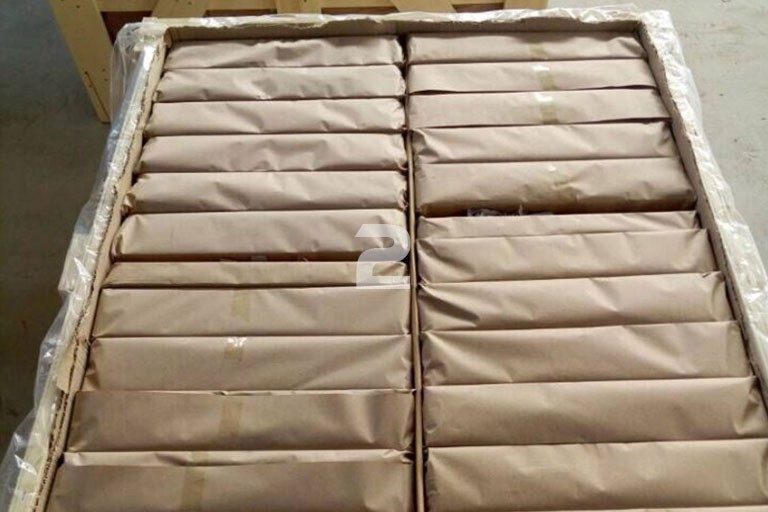


Packaging:
Step 1: PE film coating(Normally) / paper(For seashipment prevent wet).
Step 2: Kraft paper for fixation.
Step 3: Carton for glass safety protection.
Step 4: Custom make plywood case with hinge for custom(fumigation + convenient inspection) convenience.
Step 5: Packing strap for further fixation.
Port
Shenzhen or Hongkong

Send Inquiry
You Might Also Like